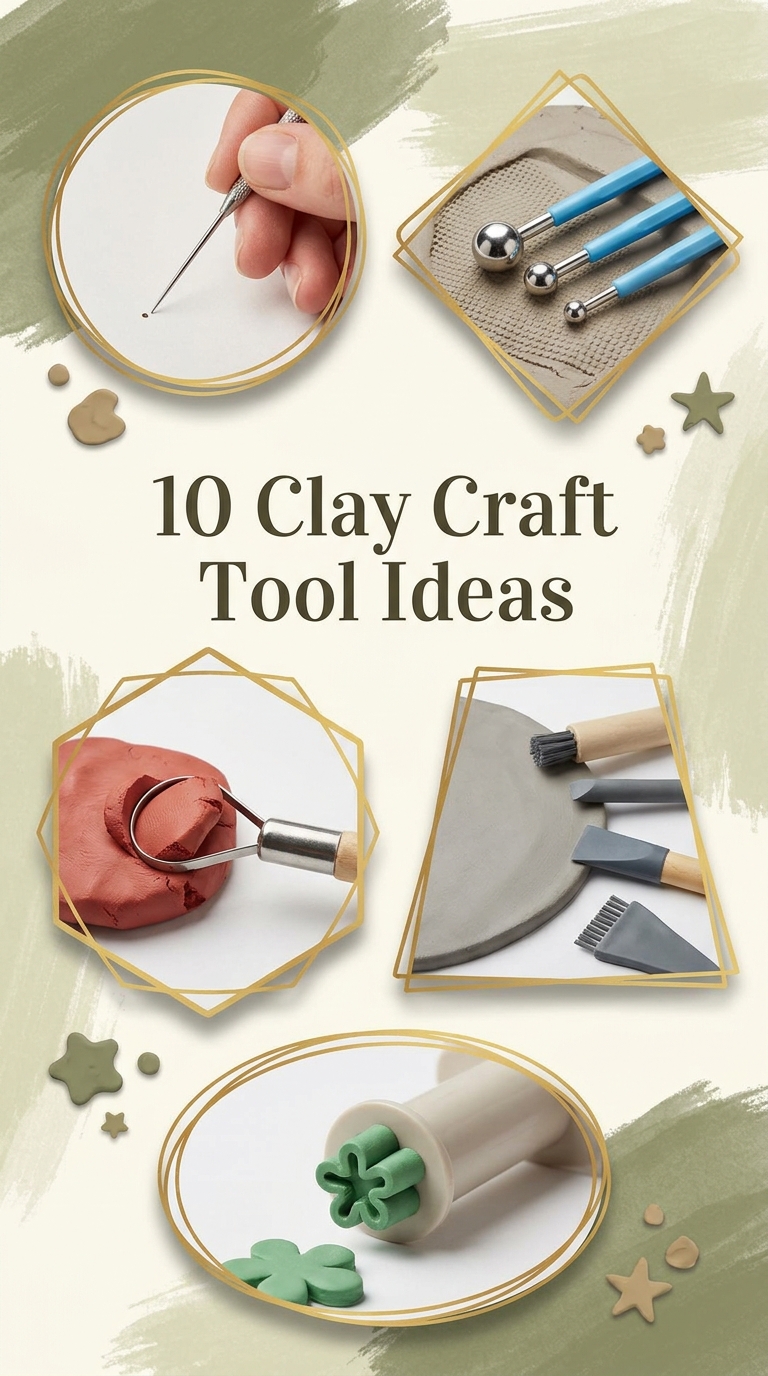
Clay crafting is a rewarding hobby that allows artists of all skill levels to transform simple blocks of clay into beautiful creations. Whether you work with polymer clay, air-dry clay, ceramic clay, or modeling clay, the right tools can make your projects easier, more detailed, and more enjoyable. While your hands are your most important tools, adding a few specialized clay craft tools to your collection opens up endless creative possibilities.
In this article, we’ll explore 10 clay craft tool ideas that every beginner and experienced crafter should consider. These tools help with shaping, texturing, carving, detailing, and finishing your clay projects, making them more polished and professional.
1. Ball Stylus Tool for Smooth Details
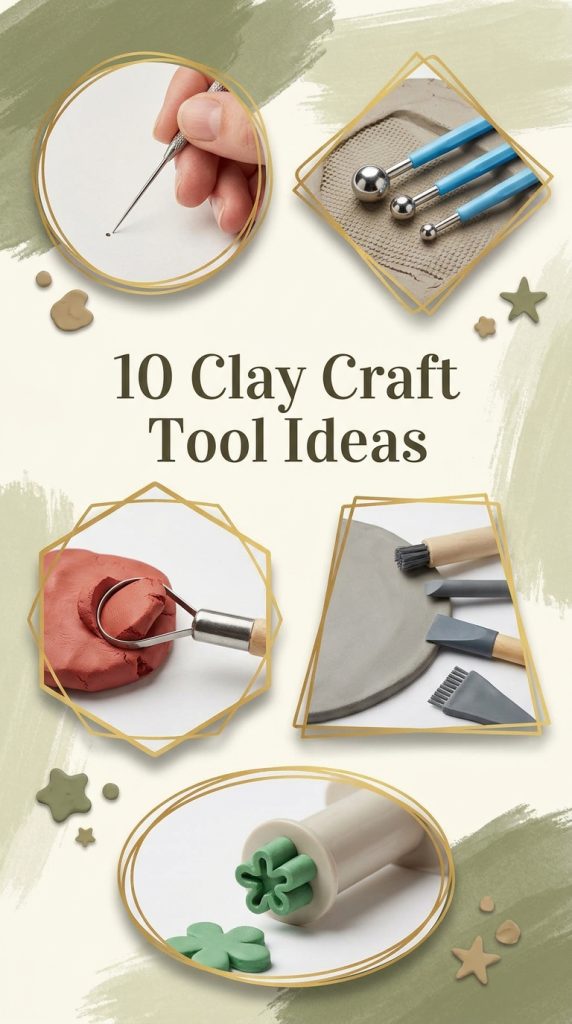
A ball stylus tool is one of the most versatile clay craft tools. It features rounded metal balls on one or both ends in different sizes. These rounded tips help create smooth indentations, shape flower petals, blend seams, and add realistic details to miniature sculptures.
Small ball styluses are ideal for delicate facial features, while larger ones help shape bowls, leaves, and decorative patterns. They’re also perfect for creating rounded impressions without leaving harsh edges.
This tool is especially useful for polymer clay jewelry makers and miniature artists who need precise yet gentle shaping.
Best for: Flowers, doll faces, miniature food, and jewelry.
2. Needle Detail Tool for Fine Lines
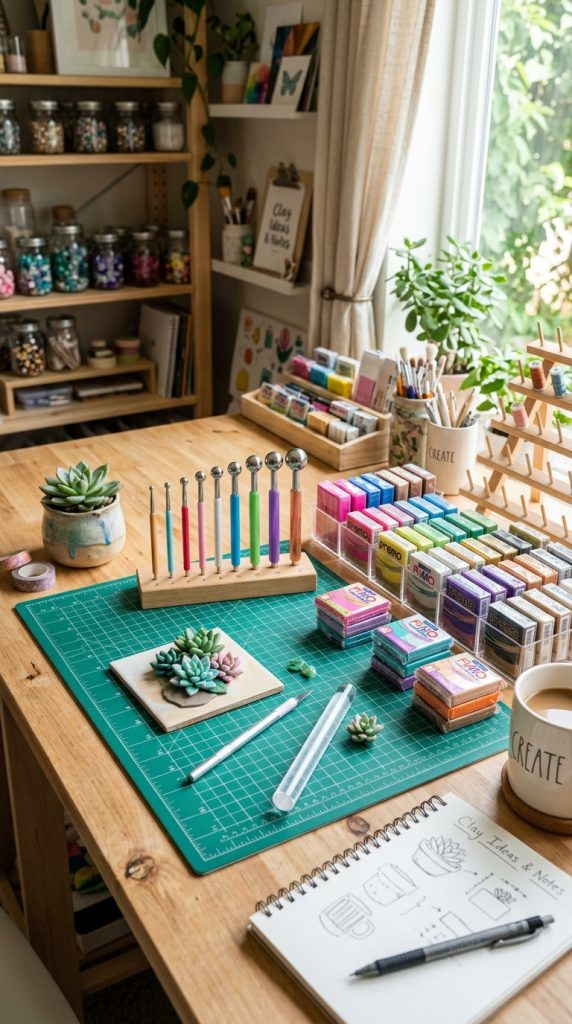
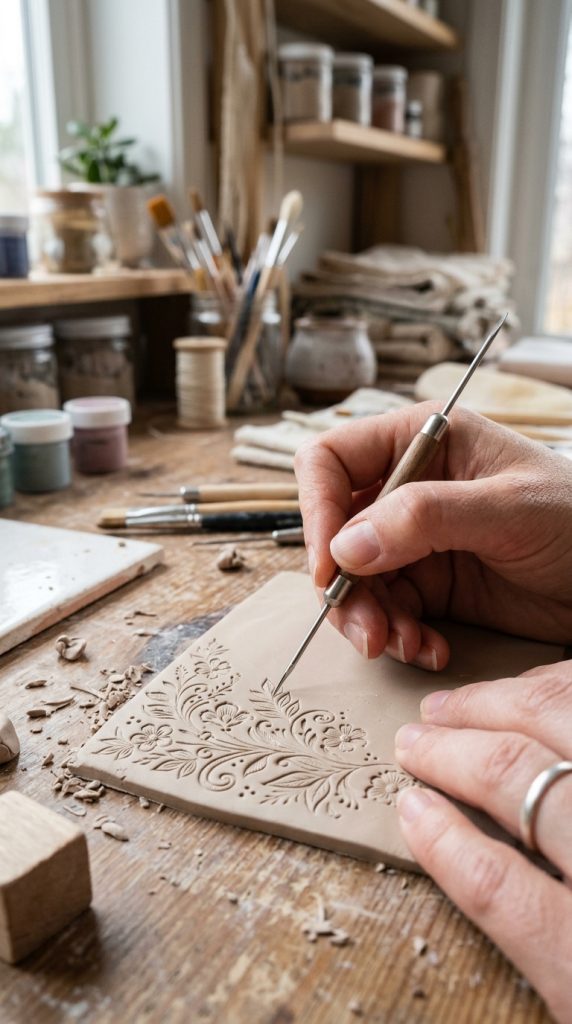
A needle tool features a sharp metal point attached to a comfortable handle. It’s excellent for drawing precise lines, piercing holes, removing tiny imperfections, and marking cutting guides before slicing clay.
The needle tool also helps position tiny clay pieces without leaving fingerprints. Artists frequently use it to create hair strands, feather textures, and intricate decorative designs.
Because it’s so precise, this simple tool quickly becomes one of the most-used items in any clay toolkit.
Best for: Fine engraving, scoring, texture work, and tiny details.
3. Silicone Clay Shapers
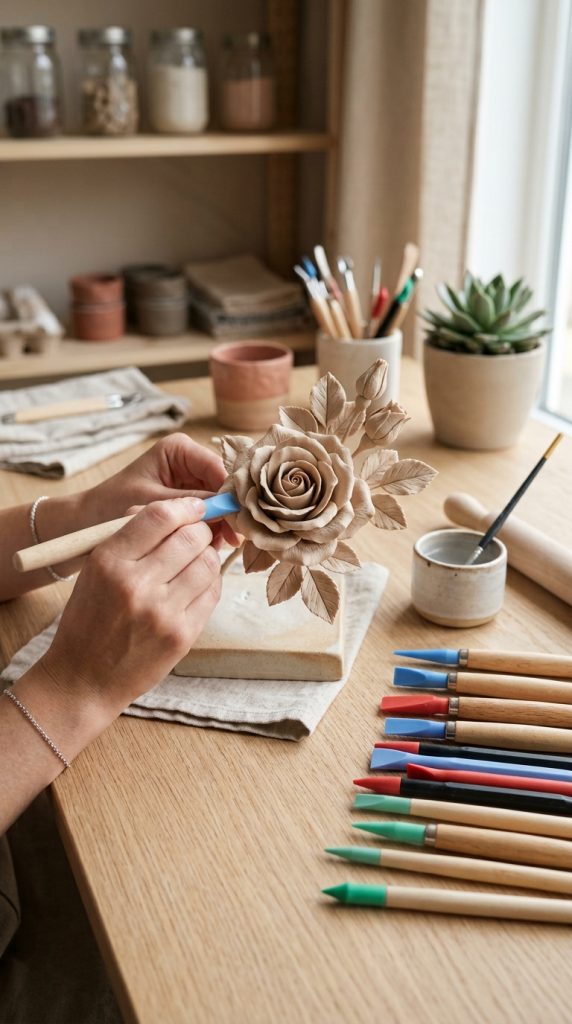
Silicone-tipped clay shapers combine flexibility with control. Instead of metal ends, they have soft silicone tips available in several shapes like chisel, cone, flat, cup, and taper.
These tools smooth fingerprints, blend seams, shape soft clay, and create gentle curves without sticking to the surface. They’re especially useful when working with delicate sculptures where metal tools may leave unwanted marks.
Silicone shapers also work beautifully with paints, sculpting paste, and epoxy clay.
Best for: Blending, smoothing, sculpting faces, and refining edges.
4. Texture Roller and Stamps
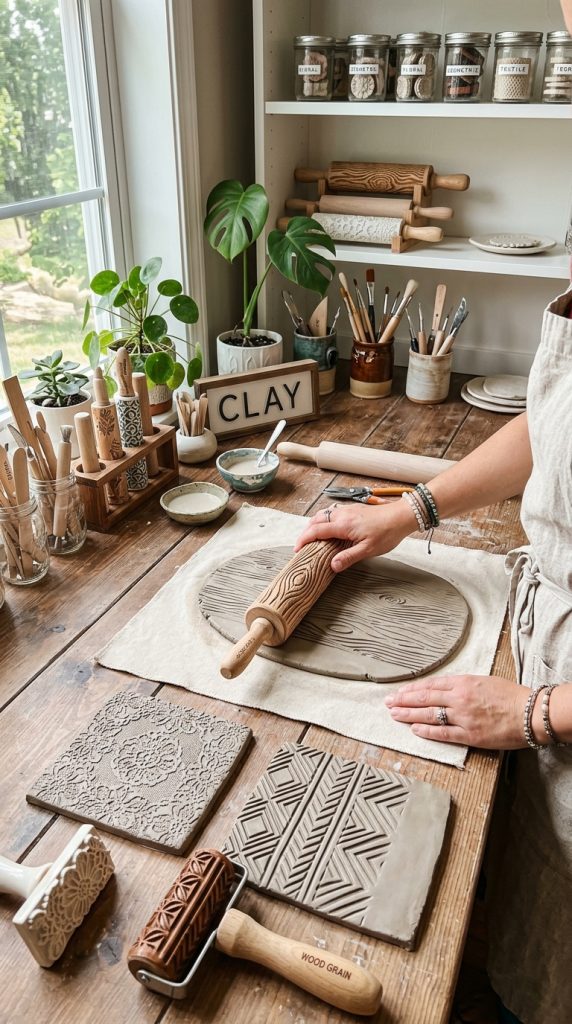
Texture rollers and clay stamps instantly transform plain clay into decorative masterpieces. Instead of carving every detail by hand, simply roll or press the textured surface onto the clay.
Popular patterns include:
- Wood grain
- Brick texture
- Floral vines
- Lace
- Leaves
- Geometric designs
- Fabric textures
These tools save time while creating consistent, professional-looking patterns across large surfaces.
They’re especially useful for home décor projects, ornaments, coasters, and decorative wall art.
Best for: Decorative backgrounds and repeating patterns.
5. Clay Cutting Blades
Sharp clay blades create clean, straight cuts without distorting soft clay. Flexible blades can slice thin sheets, trim excess clay, and create smooth edges that require minimal sanding afterward.
Many clay artists keep several blade styles, including:
- Straight blades
- Flexible blades
- Wavy blades
- Zigzag cutters
Wavy blades produce decorative edges for earrings, ornaments, and handmade decorations, while straight blades handle everyday cutting tasks.
Always handle these blades carefully and store them safely after use.
Best for: Precise cutting, trimming, and decorative edging.

6. Acrylic Rolling Pin
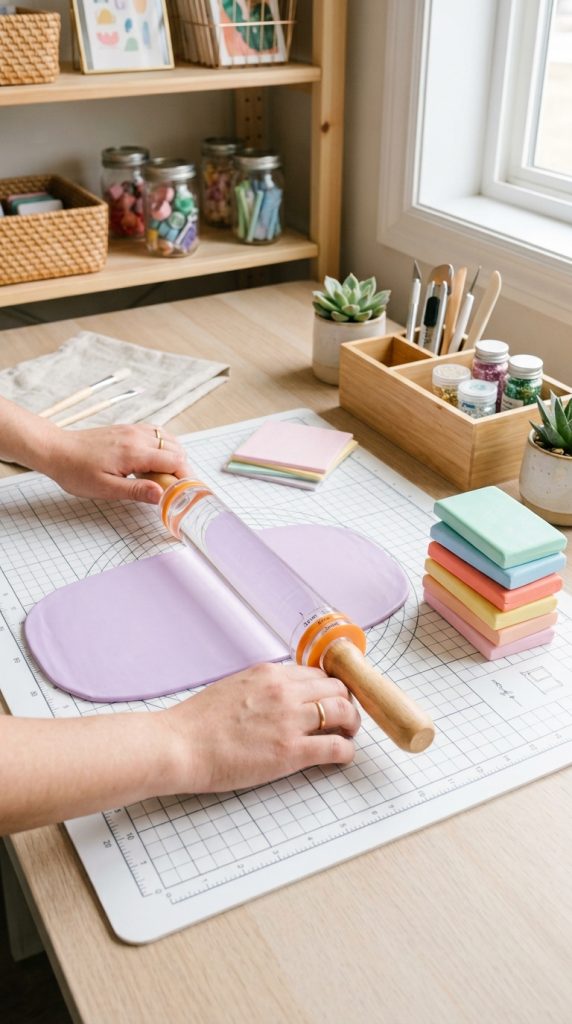
An acrylic rolling pin creates perfectly even clay sheets for jewelry, ornaments, magnets, coasters, and decorative pieces.
Unlike wooden rolling pins, acrylic doesn’t absorb moisture or leave unwanted textures behind. The transparent material also allows you to see your clay while rolling, helping maintain even thickness.
Many crafters pair rolling pins with thickness guides to produce uniform slabs every time.
This simple tool greatly improves the quality of flat clay projects.
Best for: Rolling even clay sheets and flattening slabs.
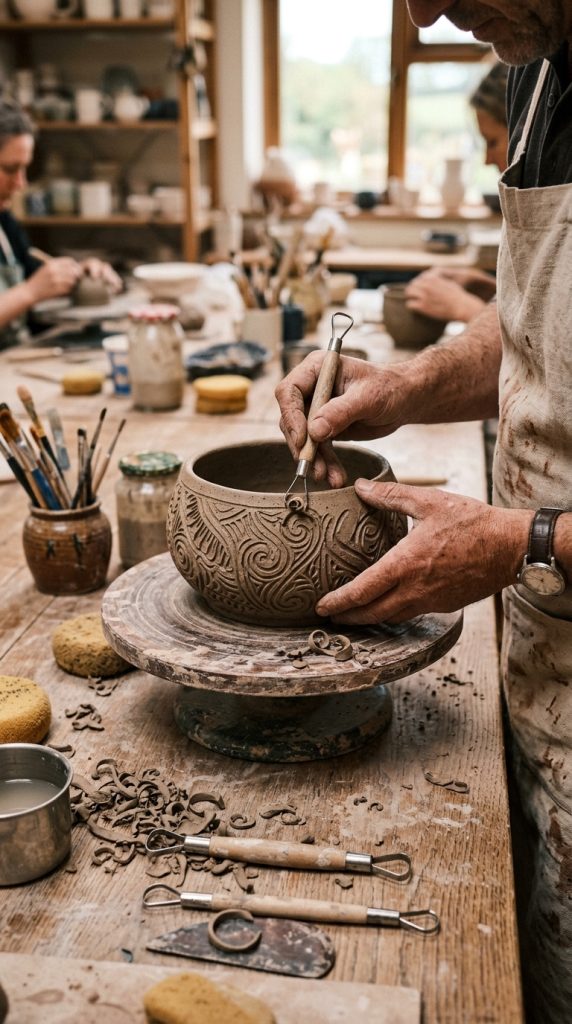
7. Loop Carving Tools
Loop carving tools feature metal wire loops in different shapes and sizes. These loops remove excess clay smoothly while allowing artists to carve deeper areas without gouging the surface.
Ceramic artists often use loop tools to hollow sculptures, refine curves, carve bowls, and create dimensional textures.
Different loop shapes offer varying carving effects, making them valuable for both beginners and advanced sculptors.
Best for: Hollowing sculptures, carving, and shaping.
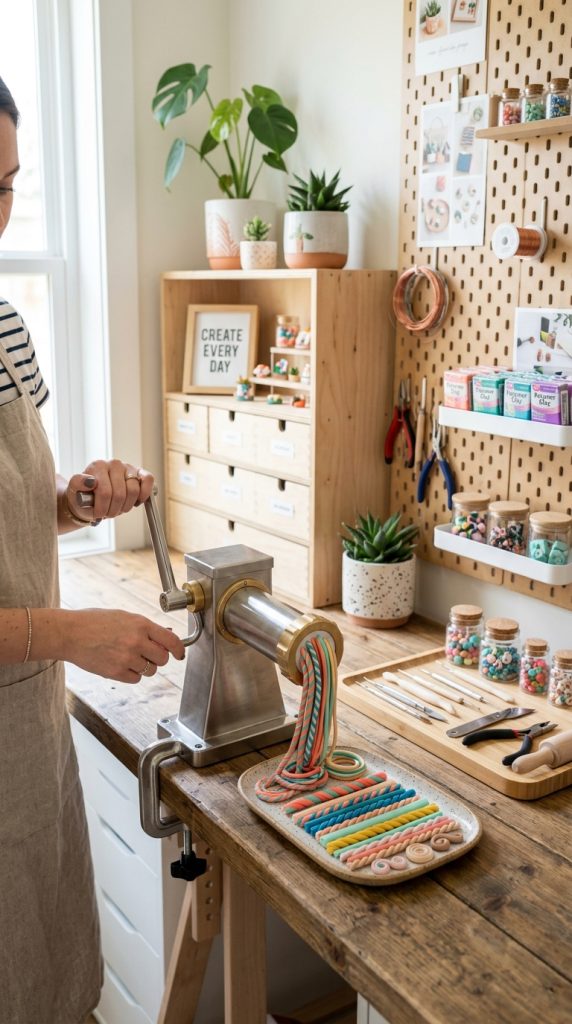
8. Clay Extruder
A clay extruder functions much like a miniature press. After placing clay inside the barrel, you push it through interchangeable discs that create different shapes.
Popular extruder designs include:
- Thin ropes
- Thick coils
- Square strips
- Triangles
- Stars
- Hollow tubes
- Decorative borders
These consistent shapes are ideal for making hair, vines, basket weaving, miniature piping, and decorative frames.
Extruders save considerable time while ensuring every strand has identical dimensions.
Best for: Clay ropes, decorative borders, and miniature details.
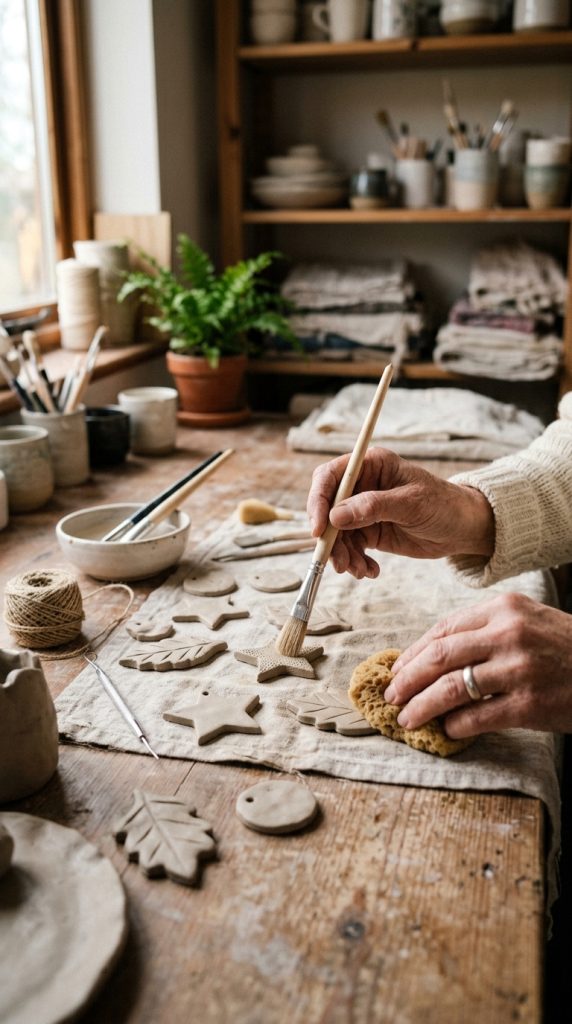
9. Sponge and Soft Brushes
Although often overlooked, soft sponges and brushes play a huge role in achieving professional finishes.
A slightly damp sponge smooths rough surfaces, softens sharp edges, and blends small imperfections before drying or baking.
Soft brushes remove dust, clean textured areas, and gently apply powders, mica pigments, or glazes. Different brush sizes allow artists to reach even the smallest details.
These finishing tools help elevate the overall appearance of every clay project.
Best for: Cleaning, smoothing, and finishing surfaces.
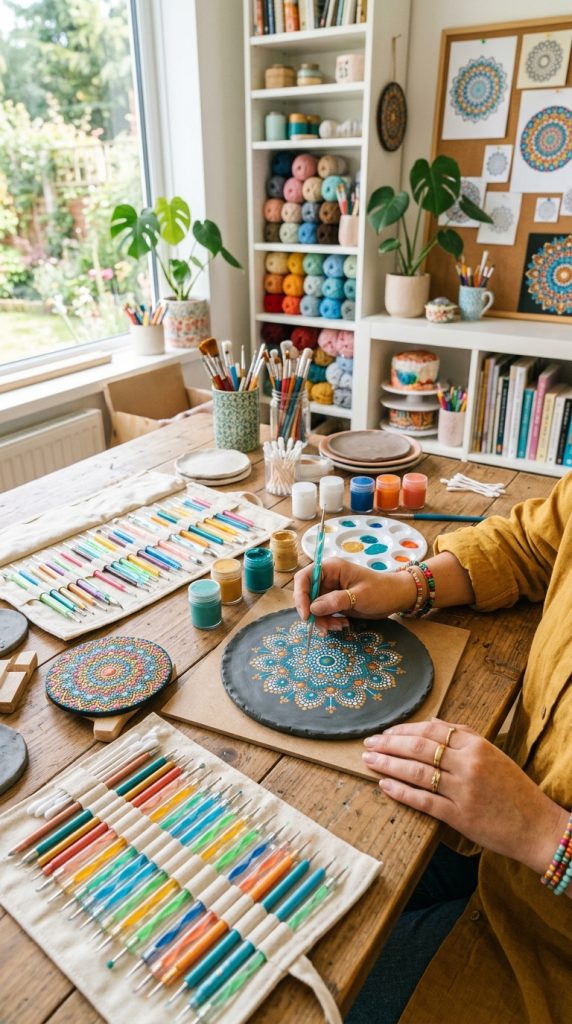
10. Dotting and Embossing Tool Set
Dotting tools create perfectly round impressions in clay, making them excellent for decorative borders, mandalas, floral centers, and geometric designs.
Many embossing sets include multiple tip sizes that allow artists to vary their designs while maintaining consistent spacing.
These tools are especially popular for:
- Mandala art
- Decorative trays
- Jewelry
- Holiday ornaments
- Personalized gifts
- Clay coasters
Their simple design makes them beginner-friendly while offering endless creative possibilities.
Best for: Decorative dots, mandalas, embossing, and surface design.
Final Thoughts
Building a well-rounded clay crafting toolkit doesn’t require purchasing expensive equipment all at once. Starting with a few essential tools like a ball stylus, needle tool, acrylic roller, and cutting blade can dramatically improve your projects. As your skills grow, adding texture rollers, silicone shapers, loop tools, extruders, and embossing tools allows you to experiment with more advanced techniques and intricate designs.
The best clay craft tools not only make sculpting easier but also inspire creativity. With the right combination of shaping, carving, cutting, and finishing tools, you’ll be able to create beautiful handmade jewelry, home décor, miniature figures, ornaments, and personalized gifts that showcase your artistic style.
Whether you’re crafting for fun, selling handmade products, or exploring a new hobby, these 10 clay craft tool ideas will help you achieve cleaner details, smoother finishes, and more professional-looking results.