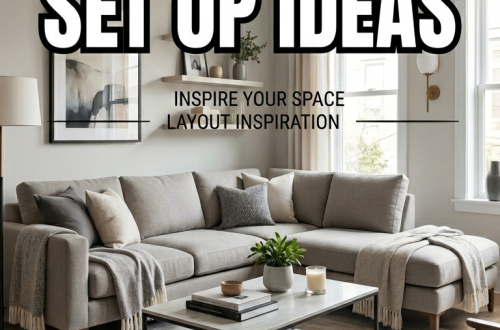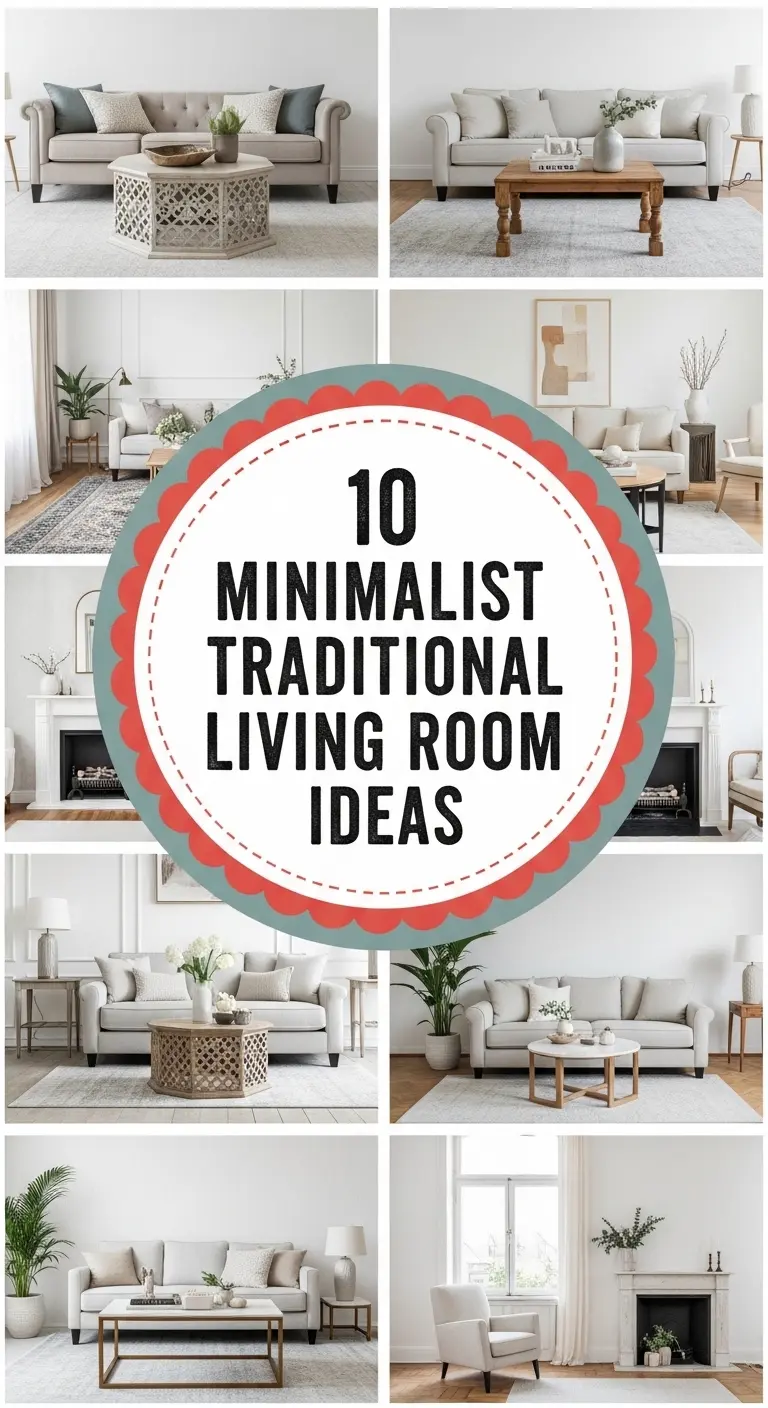
Blending minimalism with traditional design may seem like a contradiction at first, but when done right, it creates a space that feels both timeless and refreshingly uncluttered. A minimalist traditional living room combines classic elements—like elegant furniture, warm textures, and subtle patterns—with a clean, simplified approach. The result is a cozy, refined space that doesn’t feel overwhelming.
If you love the charm of traditional interiors but crave the calm of minimalism, here are 10 inspiring ideas to help you achieve the perfect balance.
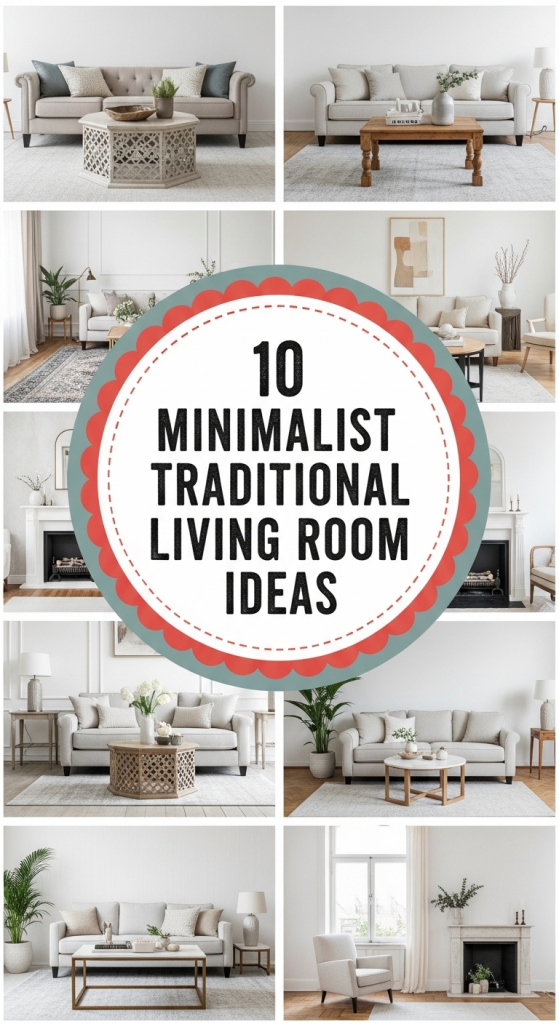
1. Neutral Color Palette with Warm Undertones
Start with a soft, neutral color scheme—think beige, ivory, soft taupe, and warm whites. Traditional design often uses rich tones, but minimalism calls for restraint. Opt for muted shades that still feel warm and inviting. This creates a calm backdrop while maintaining a classic feel.
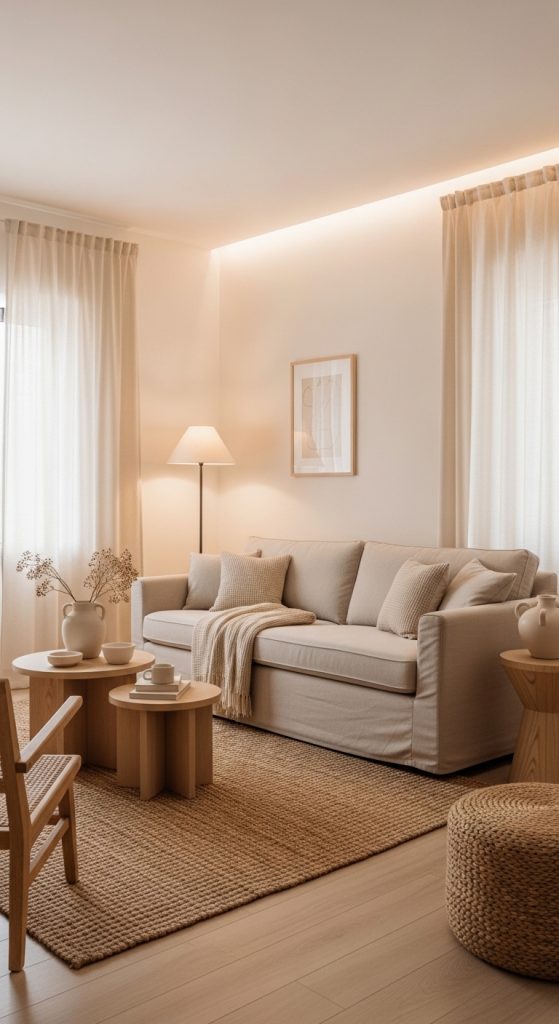
2. Choose Timeless Furniture with Simple Silhouettes
Traditional furniture doesn’t have to be bulky or overly ornate. Look for classic pieces like rolled-arm sofas or wingback chairs, but in streamlined versions. Avoid excessive carvings and instead choose furniture with subtle detailing that hints at tradition without overwhelming the space.
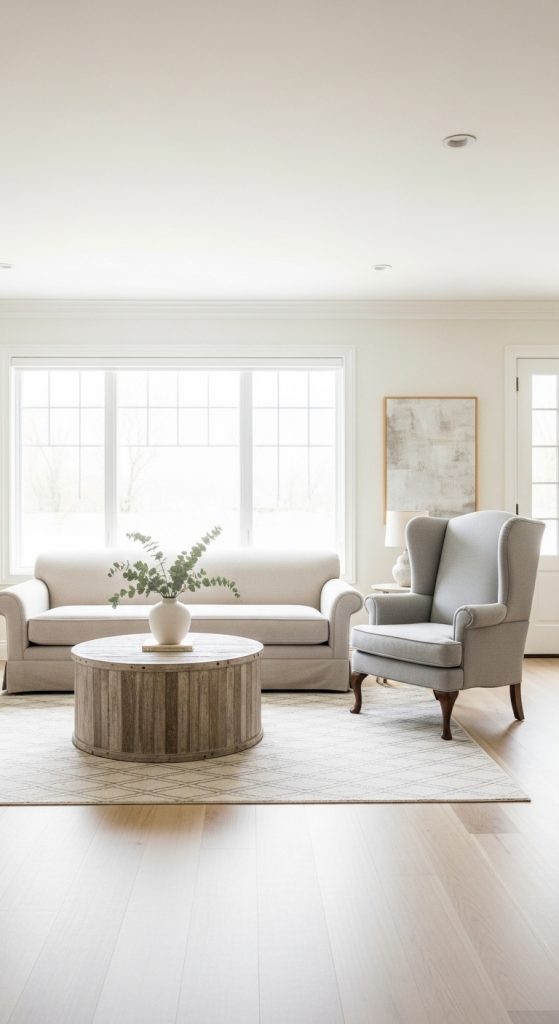
3. Limit Decorative Accessories
Minimalism is all about “less is more.” Instead of filling shelves and tables with decor, choose a few meaningful pieces—like a vintage vase, a classic clock, or a framed heirloom. Let each item stand out rather than competing for attention.
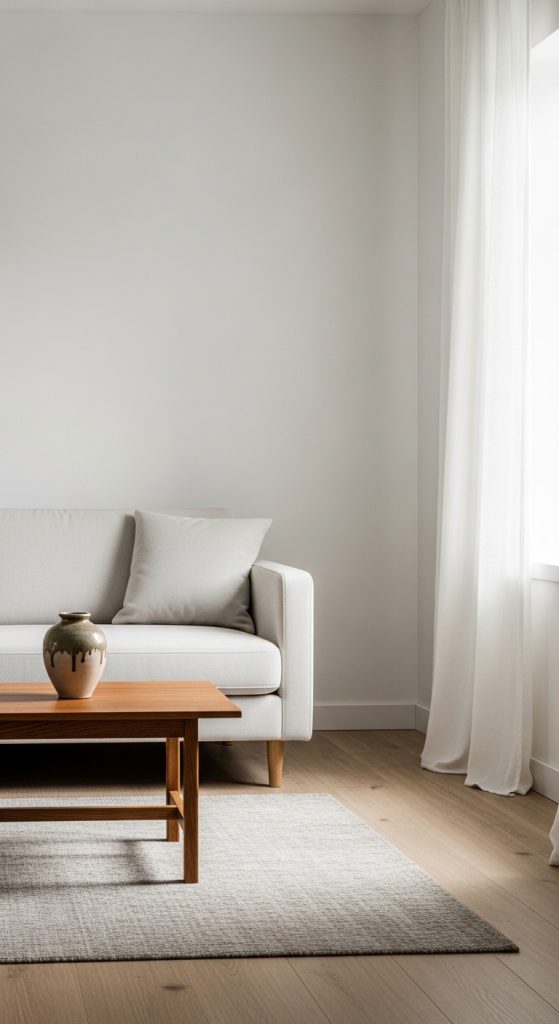
4. Incorporate Natural Materials
Wood, linen, cotton, and wool are staples in traditional design. Use these materials in a minimal way—like a wooden coffee table, linen curtains, or a wool rug. Natural textures add warmth and depth without adding visual clutter.
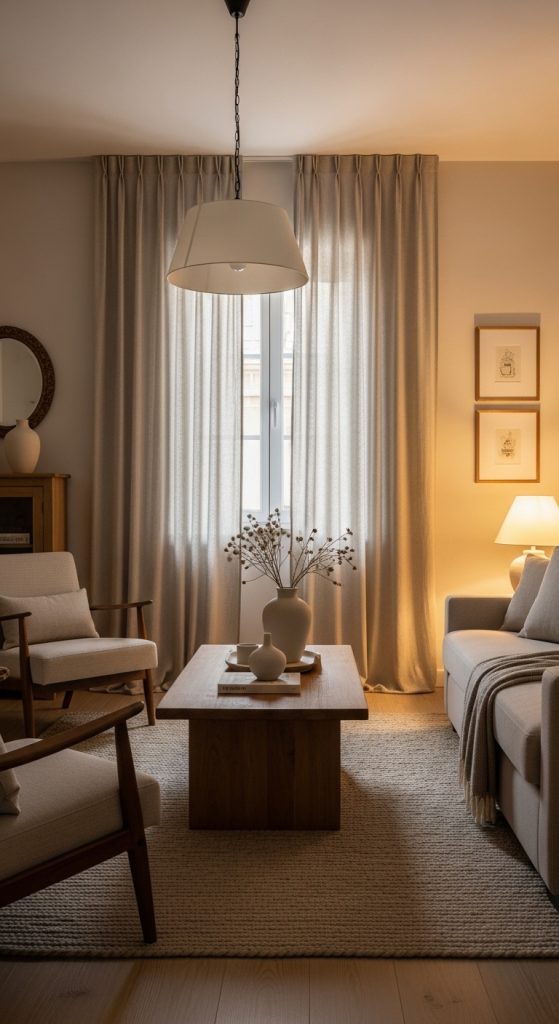
5. Use Symmetry for a Classic Look
Symmetry is a hallmark of traditional interiors. Arrange your furniture in balanced layouts—like two matching chairs facing a sofa or identical lamps on either side of a console table. This creates a sense of order and calm, which aligns perfectly with minimalist principles.
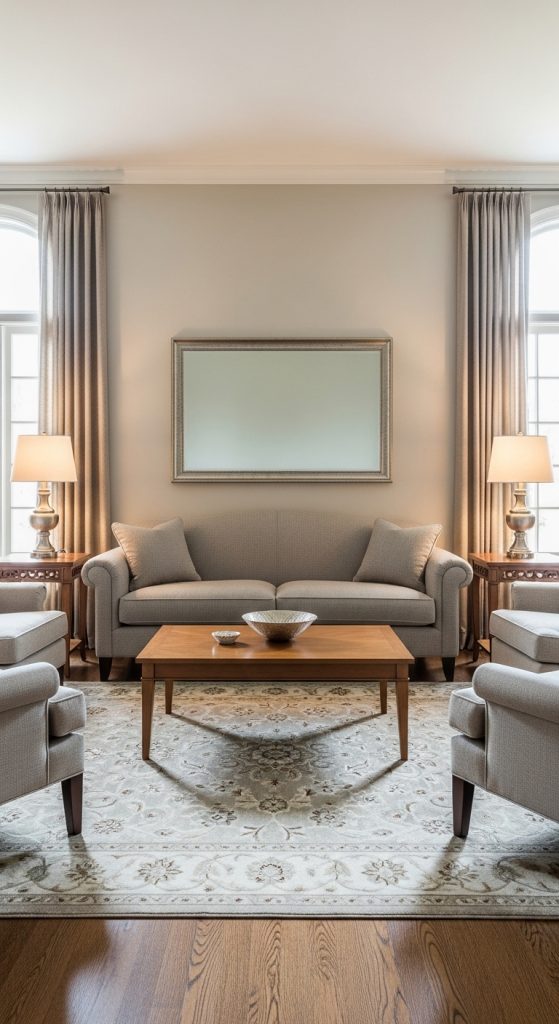
6. Opt for Subtle Patterns
Traditional spaces often include patterns, but in a minimalist approach, they should be understated. Choose soft stripes, delicate florals, or tone-on-tone designs in cushions or rugs. Keep the patterns minimal and cohesive to avoid visual chaos.

7. Keep Walls Clean but Meaningful
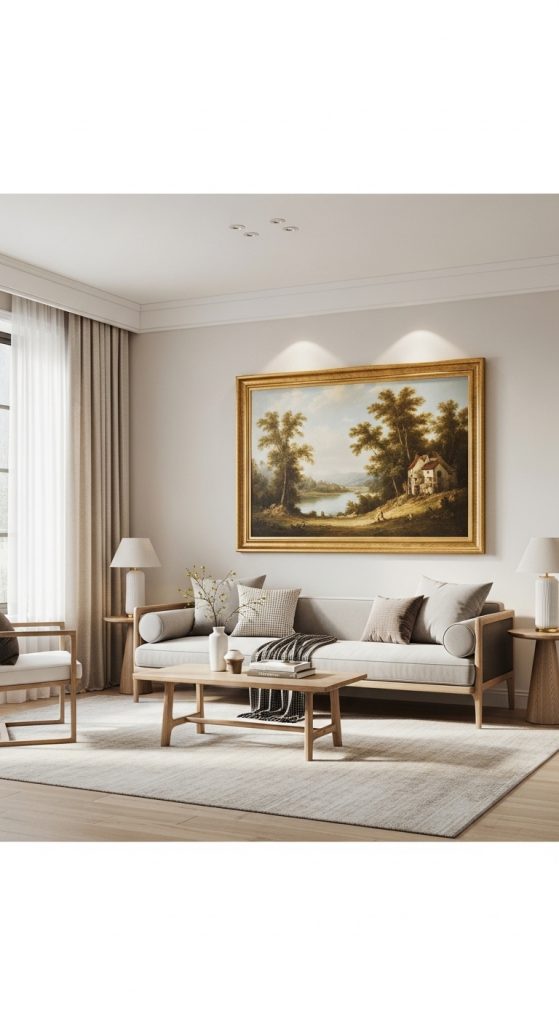
Instead of filling walls with multiple frames, choose one or two statement pieces. A large classic painting, a vintage mirror, or a simple gallery of two frames can add personality without cluttering the space.
8. Focus on Quality Over Quantity
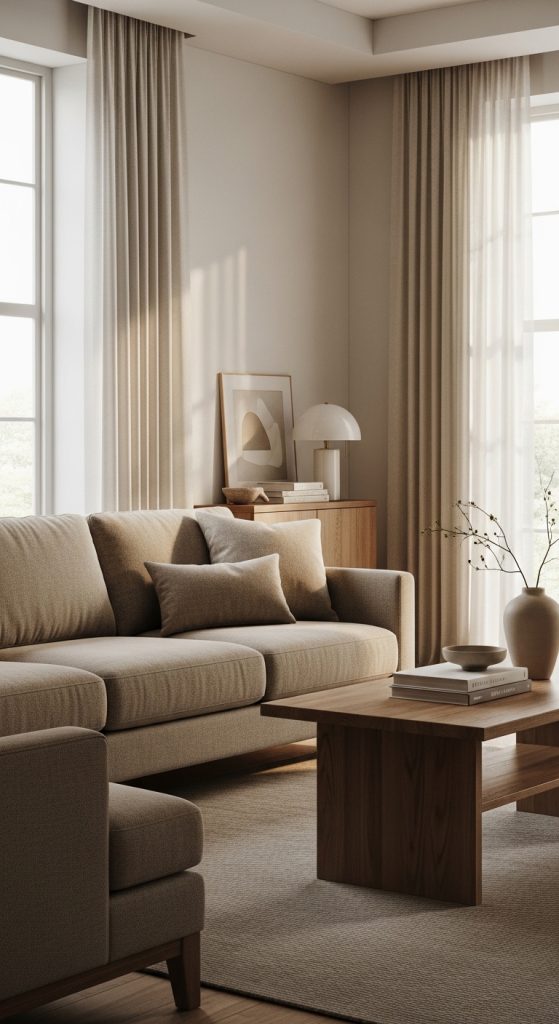
Invest in fewer but higher-quality pieces. A well-crafted sofa, a solid wood table, or a handwoven rug will elevate the room more than multiple cheaper items. This approach reflects both minimalist and traditional values—durability and timelessness.
9. Layer Soft Lighting
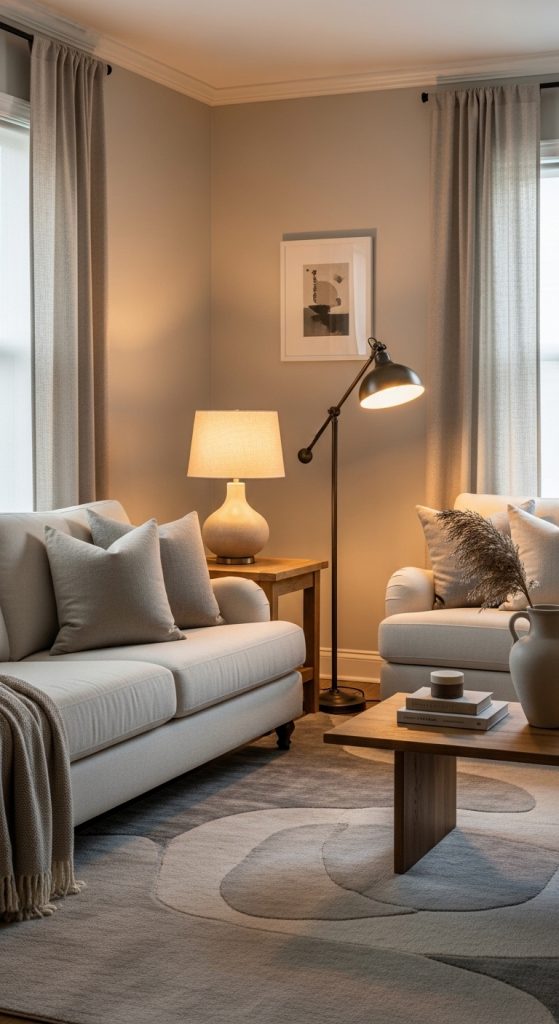
Lighting plays a crucial role in creating a cozy, traditional feel. Use a mix of table lamps, floor lamps, and perhaps a simple chandelier. Stick to warm light tones and classic designs, but avoid overly ornate fixtures.
10. Add Greenery for a Fresh Touch
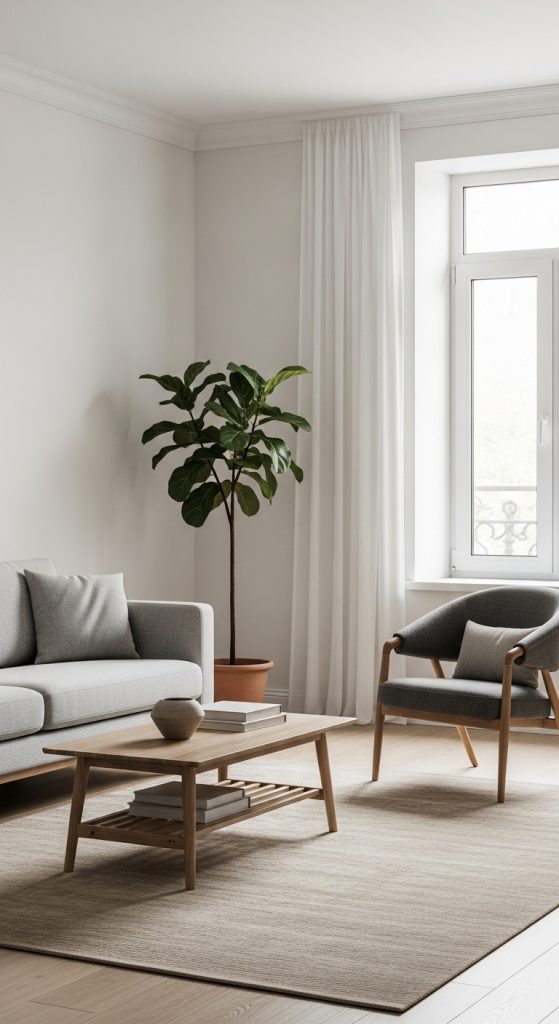
Plants bring life into any space. Choose one or two indoor plants in simple pots—like a fiddle leaf fig or a small olive tree. This adds a natural element without disrupting the minimalist aesthetic.
Final Thoughts
A minimalist traditional living room is all about balance. It respects the elegance and charm of traditional design while embracing the simplicity and calm of minimalism. By focusing on quality, symmetry, and a restrained color palette, you can create a space that feels both sophisticated and serene.
The key is to edit thoughtfully—keep what truly matters and let go of the excess. This way, your living room becomes not just a beautiful space, but a peaceful retreat.